What CES ’26 Revealed
CES ’26 did not predict the future. It clarified who will lead It.
CES did not change what matters. It revealed where organizations are truly aligned and where they are not. That distinction matters now more than ever. Gartner, the global technology research and advisory firm, predicts that by the end of 2026, traditional search could lose roughly 25 percent of its traffic as users turn to AI chatbots and virtual assistants. This shift is not happening in isolation. The daily use of tools like ChatGPT, Notion AI, Microsoft Copilot, and a rapidly expanding ecosystem of AI assistants is reshaping how people expect to find, process, and act on information.
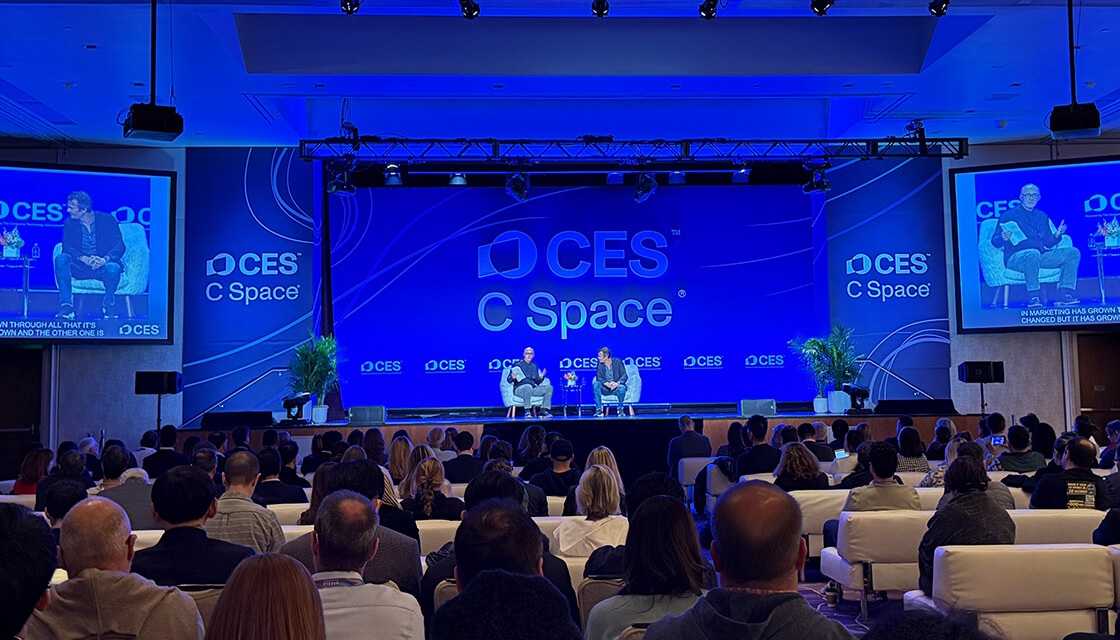
These tools are designed to do far more than retrieve links, interpreting intent, synthesizing context, and helping people think, decide, and move through a purchase cycle with greater speed and confidence. As expectations shift, search itself is becoming more conversational, more interactive, and more human, and AI is meeting that expectation with ease.
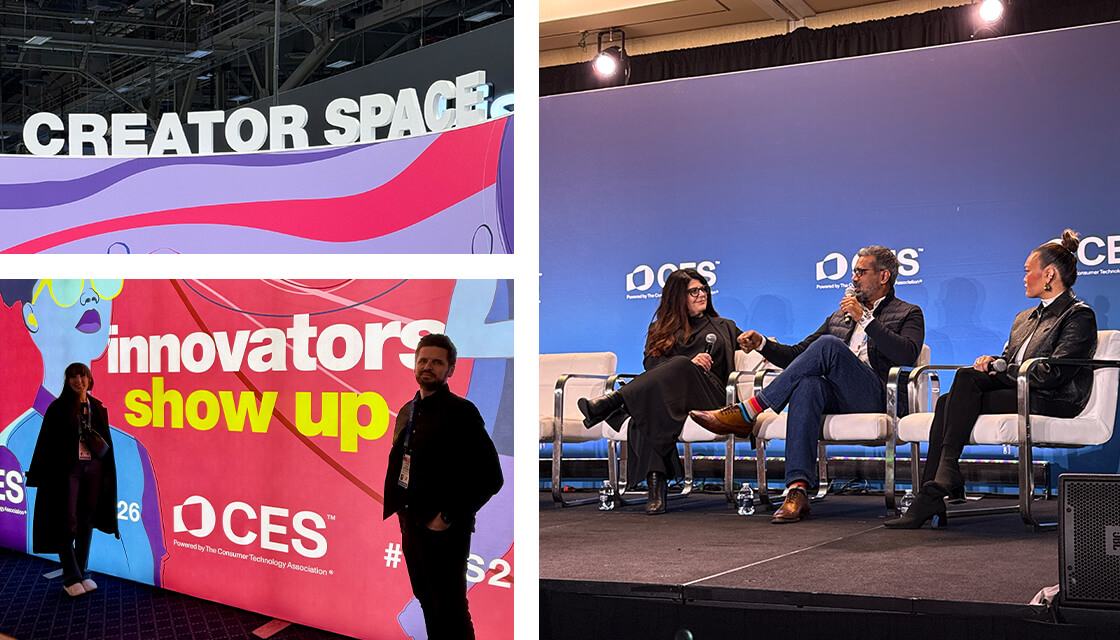
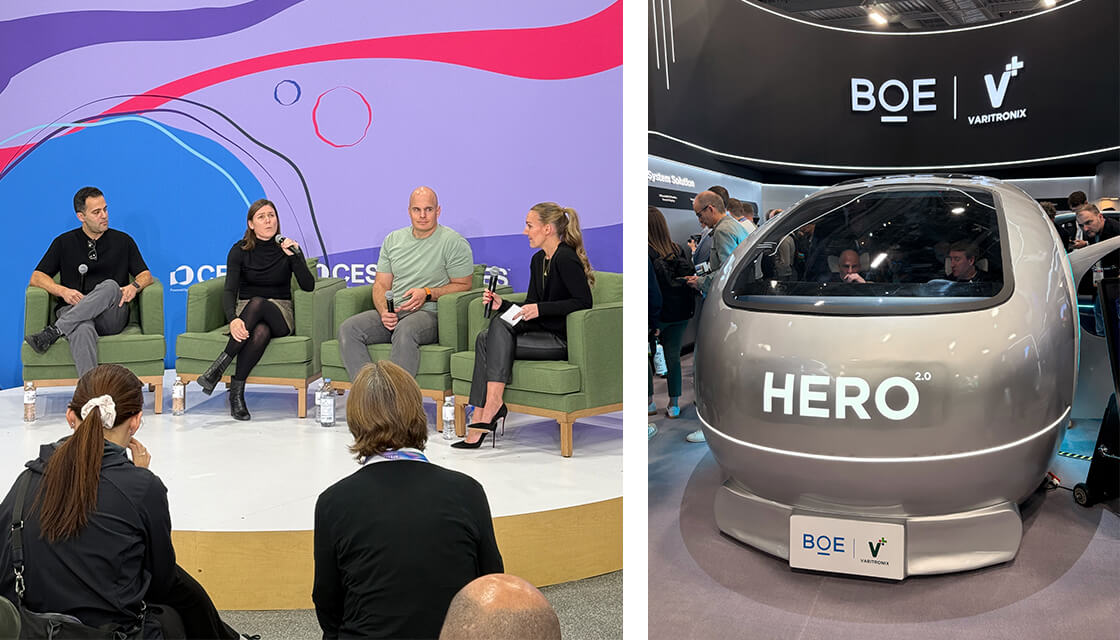
Against that backdrop, the most important signal coming out of CES for my colleagues David, Kylie and I was not technological. It was organizational.
Marketing is no longer a functional discipline focused on channels or campaigns. It is increasingly becoming the general management of the experience, accountable for how strategy, technology, culture, systems and storytelling come together to serve the customer. This shift is not about brand positioning. It is about leadership.
Customers increasingly arrive with intent already formed, shaped by culture, community, and AI mediated discovery. As a result, the traditional funnel has inverted, and the role of the organization is no longer to push people through a linear journey, but to meet them where they are with relevance, clarity and meaning.
AI accelerates this shift by removing friction across discovery, evaluation, and decision making. When applied with intent and coherence, it creates real advantage. When applied without alignment, it simply scales confusion more quickly.

1. Experience Is the Business
One of the clearest signals from CES is that the separation between brand, product and commerce is collapsing.
Experience is no longer something layered on top of the business. It is increasingly the business itself. Customers do not evaluate organizations through individual touchpoints or channels. They experience them as connected systems, where every interaction either reinforces trust or quietly erodes it.
Personalization has moved beyond optimizing conversion toward clarifying meaning. Why this matters now, why this moment is relevant, and why this organization deserves attention and confidence increasingly shape decision making.
This is where many organizations are exposed. Most do not have an AI problem. They have a coherence problem. Disconnected strategy, fragmented ownership, and unclear purpose cannot be solved with better tools. AI simply makes those gaps more visible, more quickly, and often more publicly.
2. Decisions Are Being Made Before You Show Up
Discovery itself is changing in a material way, as keywords give way to questions and links are increasingly replaced by answers.
AI systems now sit between organizations and customers, shaping understanding, narrowing options and influencing decisions long before a human interaction takes place. In many cases, these systems are the same tools people rely on every day to think and work, from ChatGPT and Copilot to embedded assistants inside platforms like Notion.
This creates a new operating reality, one in which organizations must design for both people and machines at the same time.
In this environment, clarity, usefulness and trustworthiness matter more than volume or persuasion. The organizations that win will be those whose thinking is legible, structured and genuinely helpful when questions are asked.
For CMOs still relying on traditional search visibility alone, the risk is not a gradual decline, but quiet irrelevance as decision making increasingly happens upstream inside AI mediated environments they do not control.
This is not simply a marketing evolution. It is a strategic shift that touches product, operations, communications and leadership.
3. AI Is an Operating Model Decision
Much of the most serious discussion at CES was not about creativity or content. It was about how organizations operate.
AI is moving beyond assistance toward autonomy. The real opportunity is not cost reduction for its own sake, but the replacement of inefficiency so human effort can move up the value chain. Work shifts from processing to judgment, from administration to empathy and from execution to orchestration.
There is no fixed playbook for this transition. Advantage does not come from certainty, but from learning velocity. Organizations that treat AI as a side project will struggle to keep pace with those that approach it as an operating model decision.
4. Speed Without Control Is Not an Advantage
The industry is now past the hype cycle.
The challenge ahead is operationalizing creativity, insight, and decision making responsibly and at speed. That requires clean inputs, clean outputs, clear governance and human accountability at every stage. AI does not replace judgment. It increases the value of it.
Teams are not being reduced. They are being reconfigured. Human and AI collaboration becomes the baseline, and experience once again becomes a competitive advantage, particularly in knowing which questions to ask and which signals to trust.
One idea surfaced repeatedly throughout CES. There is no future proofing.

The advantage belongs to organizations that learn faster than the market and design systems that allow their best thinking to scale without losing control. This moment is not about adopting AI tools. It is about alignment across leadership, structure, and intent.
For CMOs and C suite leaders, the question is no longer whether to use these technologies. It is whether the organization itself is designed to use them well.

Co-Authors: